Video by the Naturparkschoul on the topic of Bongerten

What is it - Orchards?

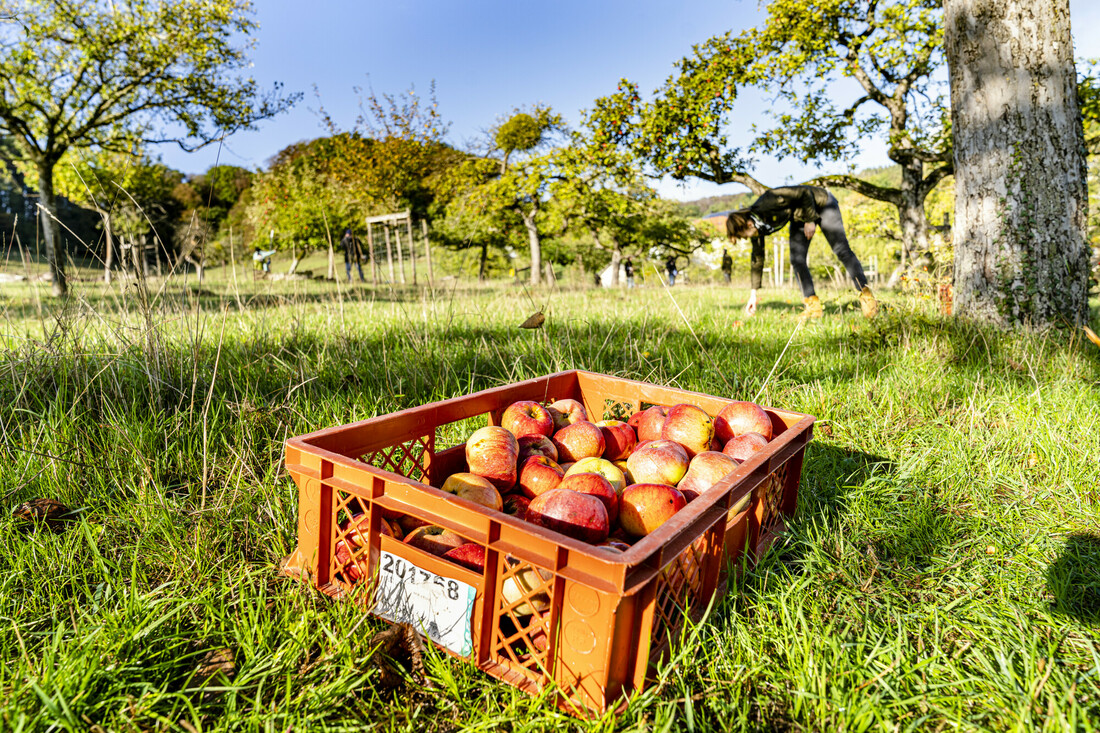
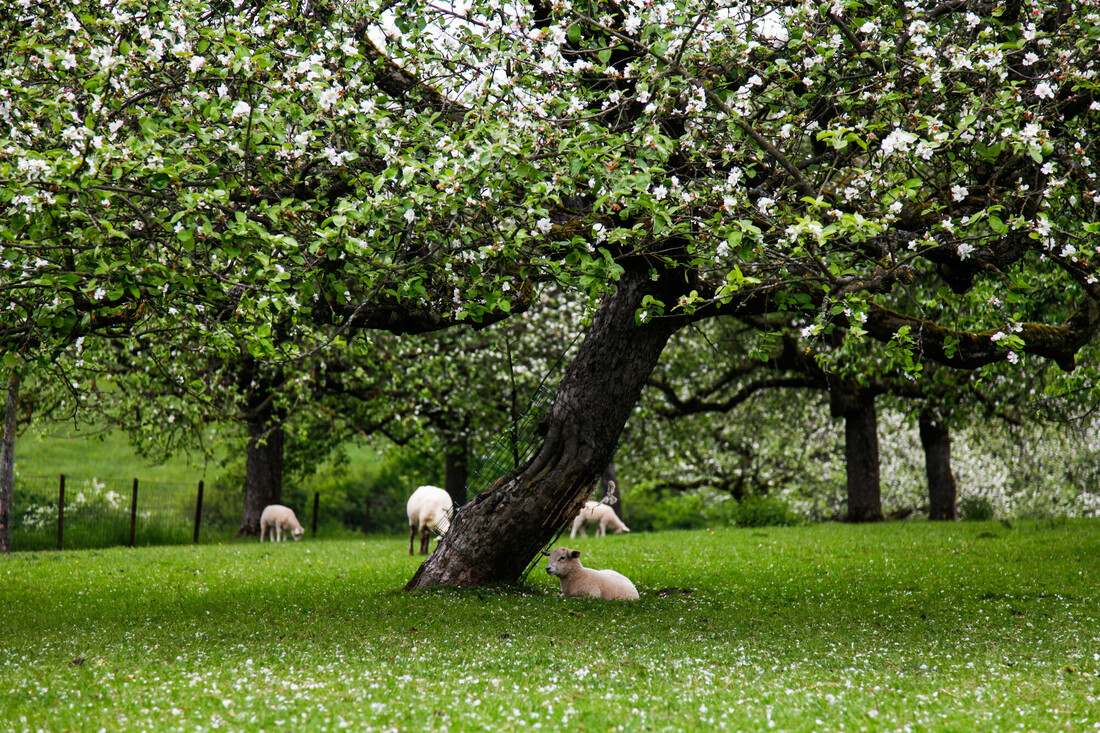
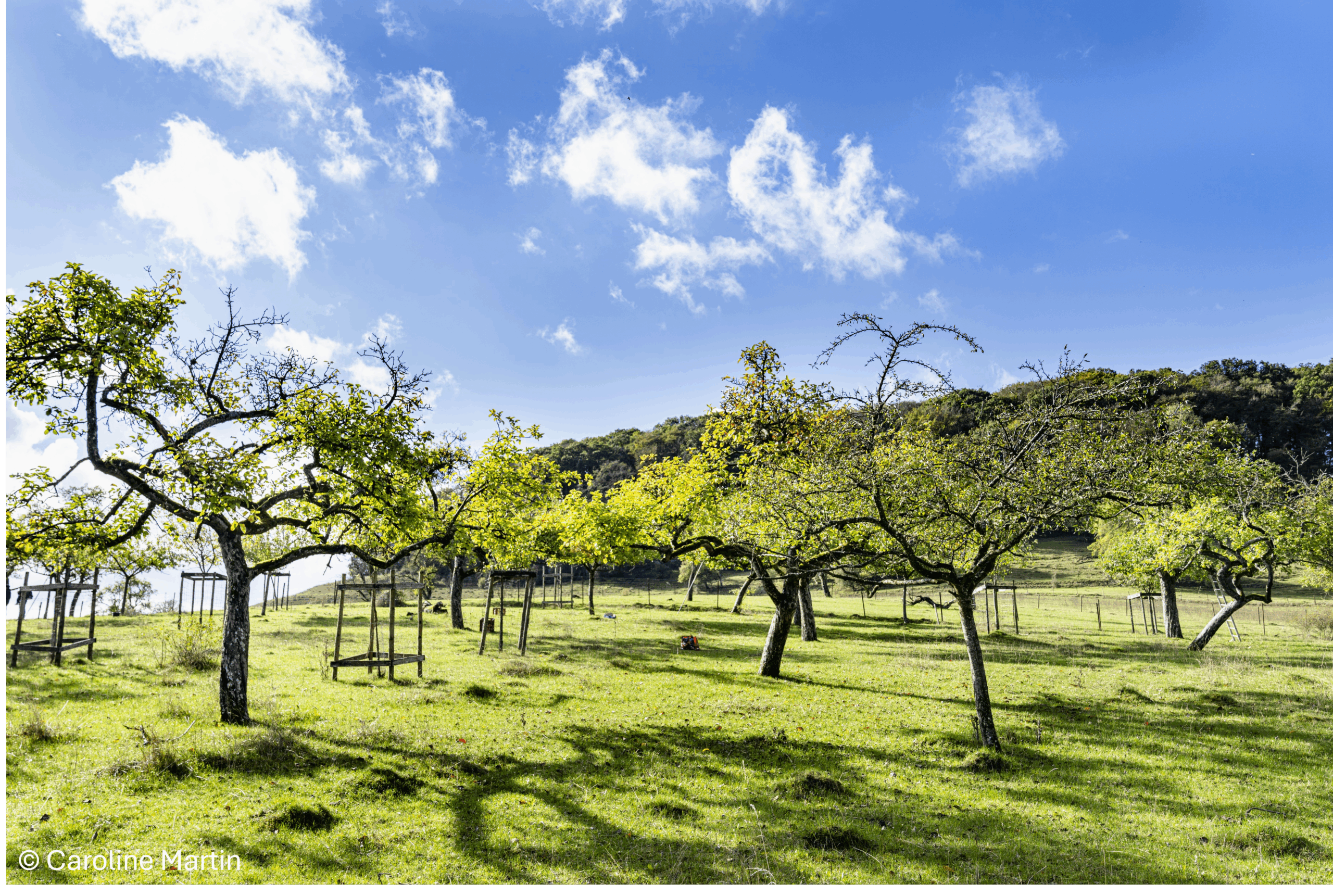
The term “orchard meadows” (Luxembourgish: Bongerten) refers to clusters of high-stemmed fruit trees. The trees are spaced far enough apart so that each tree has sufficient space and light to grow. The grassland beneath the trees is usually used extensively as pasture or hay meadows.

Diversity

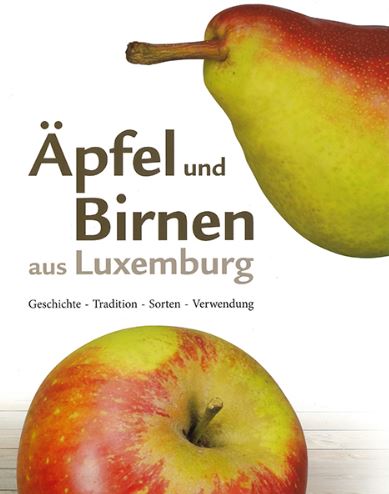
A key characteristic of orchard meadows is their diversity in age and variety. This means that within a single stand, there are both young and old trees, and often a mix of, for example, apple, pear, and plum trees, as well as different varieties of these fruit types. A typical apple variety in Luxembourg is, for example, the “Triumph of Luxembourg” or the “Luxembourg Renette.”

Preservation through Use

Without proper management (including tree care and grassland maintenance), there would be no orchards. Everyone who specifically enjoys orchard products actively contributes to their preservation. Do you own a Bongert, want to create one, or simply plant a few fruit trees? Then contact your Biological Station for a free consultation—from selecting the right fruit species and varieties to possible financing programs.

In the following video, you can learn more about the Bongert habitat:
Video on fruit variety diversity from the series “Curiosities at the Mëllerdall Nature & Geopark”

Appreciating - Orchards

Natural & Cultural Heritage

Fruit growing arrived in what is now Luxembourg via Greece from Egypt, India, and Persia, brought by the Romans. The orchard meadows that developed from this are a defining feature of our cultural landscape—that is, a landscape shaped by human activity. Regional identities and valuable traditional techniques—from maintenance and cultivation to harvesting and processing—are thus tied to this landscape. In Germany and Austria, orchard farming has been recognized as Intangible Cultural Heritage since 2021 and 2023, respectively. Since October 17, 2025, the “Kultur vun de Bongerten” has also been part of Luxembourg’s Intangible Cultural Heritage.

Most Biodiverse Habitat in Central Eruope

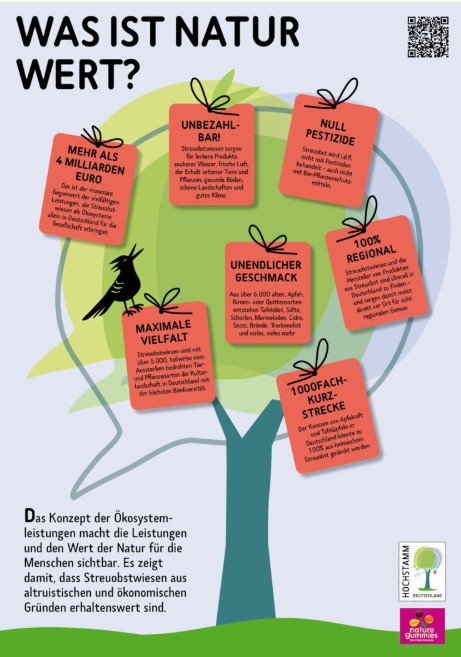
Thanks to their mosaic of diverse structures, orchard meadows—home to over 5,000 animal and plant species—represent a biodiversity hotspot.

There is also an enormous variety of fruit species and varieties found here. This diversity is at risk of disappearing if orchard meadows are not preserved. Learn more in the following video:

Preserving - Orchards

The motto is: Preservation through use!

Orchard meadows (lux: Bongerten) are part of our cultural landscape—that is, a landscape created by humans in which a utilitarian function predominates. They can only be preserved through proper management, which includes caring for both the trees and the meadows. Hundreds of years ago, they were mostly established around villages to significantly increase land productivity: grass or hay for the animals at the bottom, trees for fruit, shade, firewood, etc., at the top.

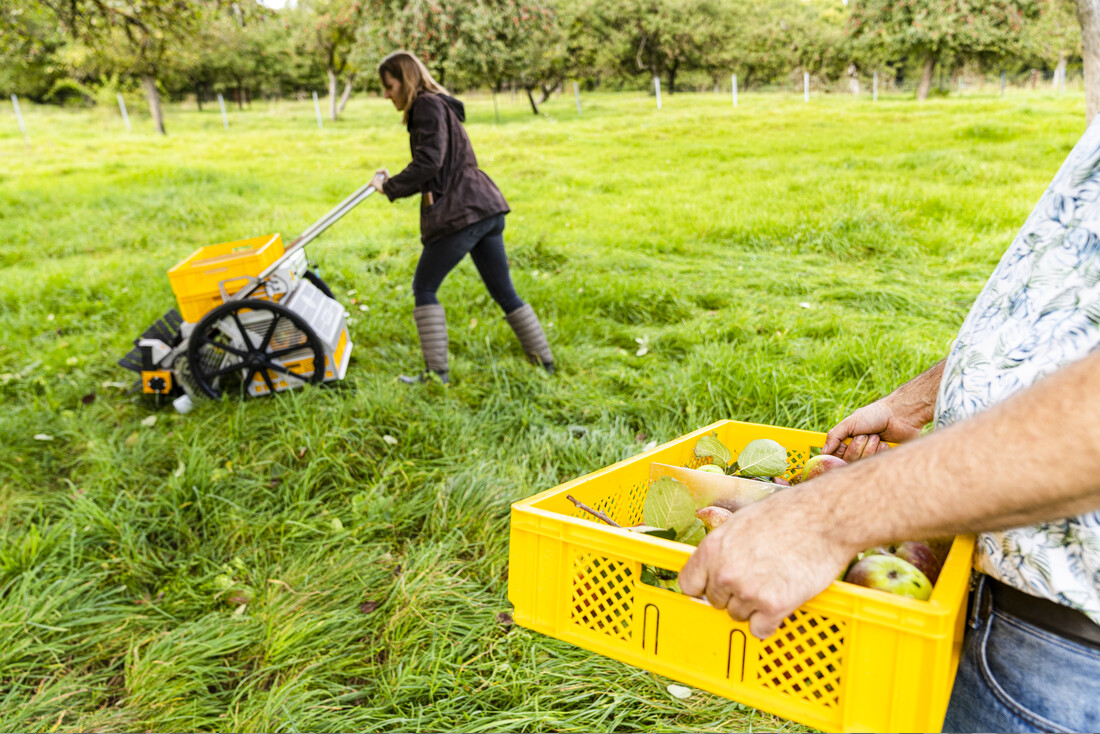
The high-quality fruit from these orchards has always been used for a wide variety of purposes. Even today, local producers process the fruit into delicious, regionally typical products of very high quality (apple juice, fine brandies, cider, and much more). Similarly, products derived from, for example, the management of the meadows beneath the trees could be promoted. In other countries, efforts are already underway to establish a label or trademark for orchard meadow products.

With Kierfchen, we want to do our part to ensure that orchard meadow cultivation is economically viable:

  • Check out the “Business” section on our bulletin board and discover regional producers and restaurants!
  • Make use of your orchard, or make your orchard available to those seeking relaxation, or plan an event yourself—feel free to include fruit processing as well!